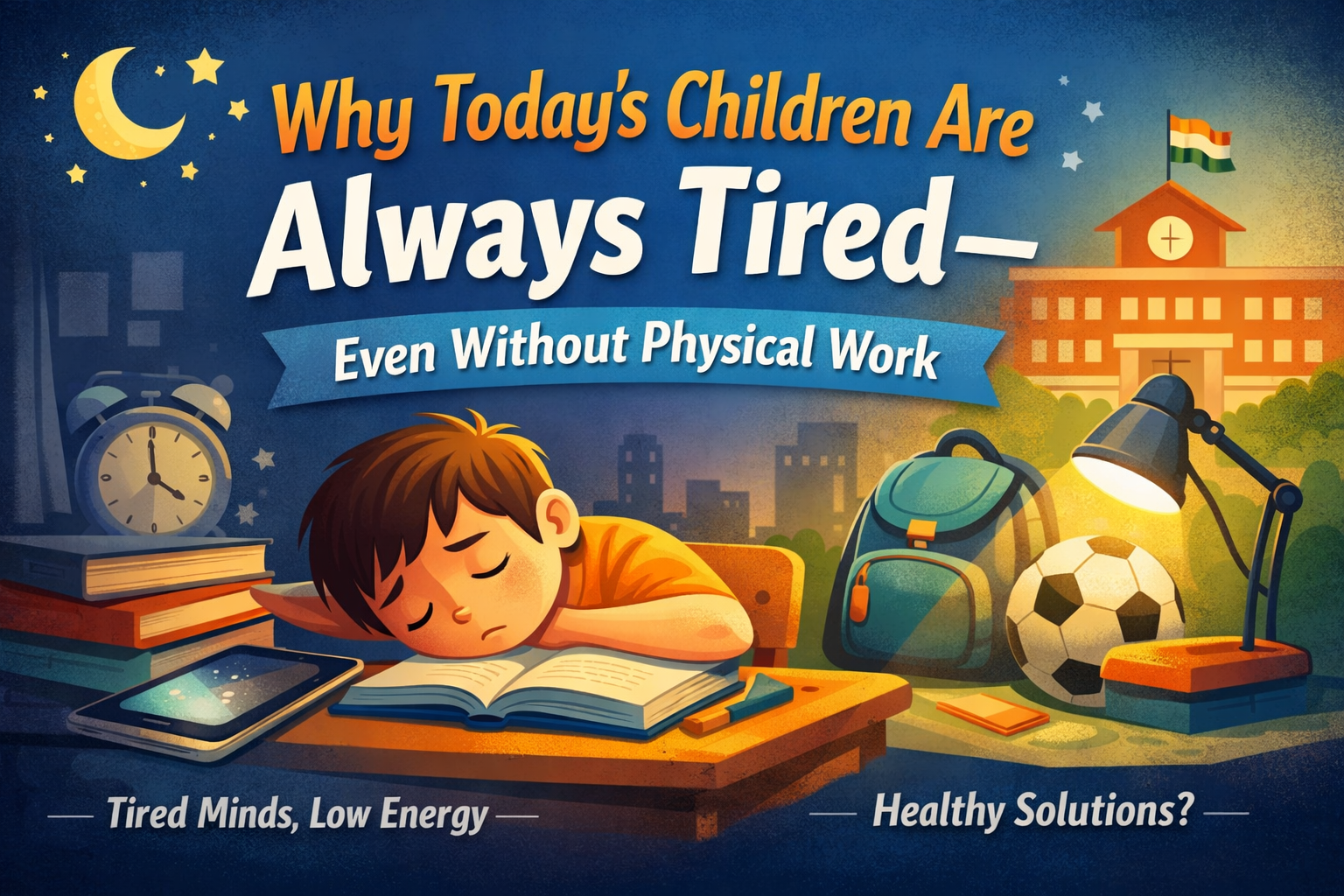
Why Today’s Children Are Always Tired—Even Without Physical Work

The Problem Parents Are Seeing
Many parents today notice the same pattern at home. Children are not running around all day, yet they feel tired. They wake up sleepy, complain of low energy, and struggle to stay active or focused.
This tiredness often shows up quietly—in the mornings, during homework, or even during playtime. Parents naturally wonder, “Why is my child so tired when they haven’t done much?”
This is no longer an occasional concern. It has become a common experience across many families.
Why This Is Happening Today
1. Too Much Mental Stimulation, Too Little Physical Movement
Children today spend a large part of their day engaging with screens—whether for learning, entertainment, or communication. While screens are now a part of everyday life, constant mental stimulation leaves very little space for the mind to slow down.
When the brain stays active for long hours, the body begins to feel tired—even if the child hasn’t done heavy physical work.
2. Busy Days Without Real Downtime
School hours, homework, tuition, and activities often fill the day from morning to evening. What is missing for many children is unstructured time—time to move freely, rest, or simply be themselves.
Without moments of genuine downtime, mental tiredness builds up and slowly turns into physical exhaustion.
3. Disturbed Sleep Patterns
Late bedtimes, screen exposure close to sleep, and irregular routines affect sleep quality. Children may sleep for many hours but still wake up feeling unrested.
Sleep is the time when the body recovers and the mind resets. When sleep is disturbed, tiredness becomes a regular part of daily life.
Why This Matters More Than We Think
Persistent tiredness affects much more than energy levels. Over time, it can influence concentration, learning ability, emotional balance, immunity, confidence, and motivation.
When children feel tired often, they may start avoiding challenges—not because they lack ability, but because they don’t feel ready from within.
What We’re Seeing Across India
Across urban Indian households, lifestyle patterns have changed significantly in recent years. Screen exposure has increased, outdoor playtime has reduced, and sleep routines have become irregular.
Pediatricians and child specialists are increasingly observing fatigue, poor sleep quality, and reduced stamina among school-going children. This confirms that what parents are noticing at home is part of a broader trend, not an isolated issue.
Why This Is Not Just a Home Issue
Children spend a large portion of their day at school, where schedules, learning formats, and daily routines also influence energy levels.
Teachers today manage academic expectations, classroom engagement, and growing emotional needs. When home and school work in alignment—balancing learning with movement and rest—children benefit the most.
What Parents Can Do (Simple & Practical)
Small, consistent steps can help restore balance:
· Encourage daily physical movement, even simple outdoor play
· Reduce screen exposure closer to bedtime
· Keep daily routines predictable and calm
· Avoid overloading the day with too many activities
· Ensure enough time for rest and free play
Small Steps That Help at School
Even small changes in the school environment can support children’s energy and well-being:
· Short movement breaks between activities
· A healthy balance between screen-based and offline learning
· Recognising tiredness as a signal, not misbehaviour
Frequently Asked Questions (FAQ)
Is it normal for children to feel tired so often?
Many children experience this today due to lifestyle changes. Awareness and balance are key to improvement.
Does screen time really affect a child’s energy?
Yes. Extended screen exposure can mentally exhaust children, which often shows up as physical tiredness.
My child sleeps long hours but still feels tired. Why?
Sleep quality matters more than duration. Irregular routines and late-night screen usage can affect restfulness.
Should I reduce activities if my child feels tired?
Rather than removing everything, focus on creating a healthier balance between activity, rest, and free time.
How GrowCub Fits In
At GrowCub, we believe that strong learning begins with a strong body and a calm mind.
Our focus is on helping children develop healthy routines, emotional balance, and physical and mental strength—so they grow with energy, confidence, and resilience beyond academics.
A Closing Thought for Parents
Children are not meant to feel tired all the time. When daily routines support their natural needs, energy returns naturally.
Strong children are not created by pushing harder—but by building balance, every day.