Teaching Children About Money Before They Handle It

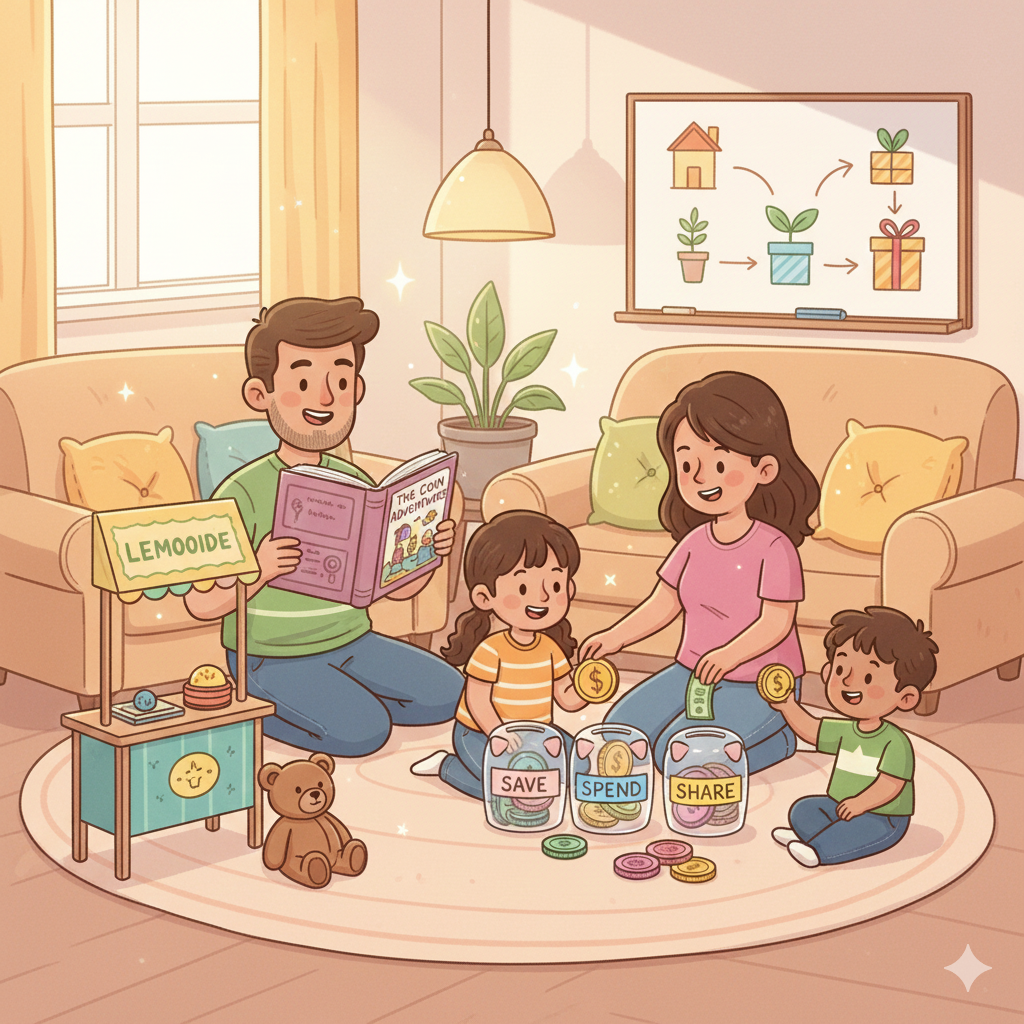
Learning about money begins long before children start spending it.\r\nThis blog explores how simple conversations and everyday choices can help children develop a thoughtful and healthy understanding of money.
One day at a shop, a child points to something on a shelf and asks for it.
The request is simple.
The moment is ordinary.
The adult responds—sometimes with a yes, sometimes with a no, and often with,
“Next time.”
The child accepts it and moves on.
But quietly, a question begins to form—not just for the child, but for the parent too.
When will my child understand how money actually works?
When Money Feels Like a Sudden Responsibility
For many children, money appears suddenly in life.
- Pocket money begins.
- School trips happen.
- Small purchases are allowed.
Until then, money often feels invisible—something adults handle in the background.
Parents then notice moments that feel slightly uncomfortable:
- A child wants something without understanding its value
- Decisions are driven by want, not thought
- “Why can’t we buy it?” becomes a common question
These moments are not about behaviour.
They are about understanding.
What Learning About Money Really Means
Teaching children about money is not about numbers or calculations.
It’s about helping them slowly understand:
- that money is limited
- that choices matter
- that every decision has a trade-off
- that waiting is sometimes necessary
- that needs and wants are different
These are life skills, not financial lessons.
Long before children hold money in their hands,
they begin forming ideas about it in their minds.
Why This Learning Is Easy to Miss
In most homes, money conversations happen quietly.
- Adults pay bills.
- Cards are tapped.
- Online payments happen instantly.
From a child’s perspective, money can feel endless and abstract.
Schools, too, focus on academic learning.
Financial understanding often comes much later—if at all.
This doesn’t happen because money isn’t important.
It happens because no one clearly defines when and how to start.
How Children Naturally Learn About Money
Children don’t learn money values through lectures.
They learn when:
- small choices are explained out loud
- everyday decisions are discussed calmly
- stories show consequences of choices
- waiting is framed as a positive skill
Repeated exposure to simple ideas helps children build a healthy relationship with money—without pressure or fear.
A Simple Everyday Example
Imagine a child asking for a toy during a visit to a store.
Instead of a quick yes or no, an adult says,
“We can buy this today, or we can save for something bigger later. What do you think?”
- There is no lesson planned.
- No rule imposed.
Just a pause.
In that moment, the child is not learning about money amounts.
They are learning about choice.
Over time, these small moments help children understand money as something to think about—not just spend.
A Gentle Thought for Parents
Teaching children about money doesn’t require early pocket money or strict rules.
It begins with:
- conversations
- transparency
- everyday decision-making
When children understand money before they handle it,
they grow up calmer, more thoughtful, and more responsible.
Closing Note
Money will always be part of life.
But children who learn to pause, consider, and choose
carry those habits far beyond spending.
Because learning about money early
is really about learning how to decide—
and that is a skill children use everywhere.